&geometry(305x90) "Cammeray Veterinary Hospital")
TPLO Surgery in Dogs
Helping Dogs Get Back on Their Feet
A TPLO (Tibial Plateau Leveling Osteotomy) is a specialised orthopedic surgery performed to treat a torn cranial cruciate ligament (CrCL) in a dog’s knee. This ligament is the same as the ACL in humans and plays a crucial role in stabilising the knee joint. When it ruptures, dogs can experience pain, lameness, and difficulty walking.
Cruciate ligament injuries are one of the most common causes of hind limb lameness in dogs. They can occur suddenly during activity or develop gradually due to ligament degeneration. Without treatment, the unstable joint can lead to ongoing pain and progressive arthritis. During a TPLO procedure, the surgeon changes the angle of the top of the tibia (shin bone). By carefully cutting and rotating this section of bone and securing it with a plate and screws, the knee becomes stable even without the damaged ligament. This allows the dog to bear weight more comfortably and return to normal movement.
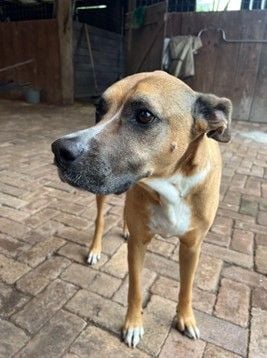
Miss Milly
TPLO Patient
TPLO surgery is currently recommended for all breeds of dogs, active individuals, or cases where long term stability and mobility are especially important. Compared with some other surgical options, a TPLO often provides excellent outcomes and a quicker return to comfortable activity when combined with appropriate post operative care and rehabilitation.
Most dogs begin to bear weight on the leg within a few days after surgery, with gradual improvement over the following weeks. With proper recovery management including rest, controlled exercise and follow up visits, many dogs return to their
normal, active lives. Here at Cammeray Vet, our experienced surgeons perform this procedure regularly. Our TPLO surgeries include local anaesthetic nerve blocks, tailored pain management and physiotherapy recommendations. All post operative medical management, surgeon advice/support and 8-week post-surgery radiographs are also included in the package.
If your dog is showing signs of hind leg lameness, stiffness after rest, or difficulty rising, our veterinarians can help determine whether a cruciate ligament injury is the cause and whether TPLO surgery may be the best treatment option for them. This was the case for one of our patients Miss Milly - her owner noticed her mobility was getting worse and she was very reluctant to get up from her bed. She did not have an obvious limp but there appeared to be mild thickening in her right knee compared to her left. There was no obvious instability palpated in her knees either.
Radiographs were taken of her knees to look for evidence of cruciate disease. Initial diagnostic radiographs - there is stifle effusion (inflammatory fluid) within the knee joint which is a typical sign of cruciate disease. Whilst under sedation we re-examined her knees and felt mild instability in the right side. We suspected a partial cruciate ligament rupture. As she was originally an active dog who loved to run around the house and go for walks with her family, we recommended a TPLO surgery so she could regain normal function of her knee as soon as possible.
Milly was admitted for TPLO surgery two weeks later. During surgery we confirmed she had a partial rupture of her cruciate ligament and no damage to her menisci (shock absorbers in the knee). Milly’s recovery was initially tough - she had to be helped around the house with a sling and her family was dedicated to helping with the physiotherapy three times a day.
Slowly, Milly regained normal function of her leg over 4 weeks. By 6 weeks post-surgery she was back to walking around the house unaided. Post TPLO radiographs were taken 8 weeks after surgery to assess bone healing - there is good healing of the bone where it was cut and Milly was completely back on her feet by this point, running around her home after her sisters and enjoying her evening family walks.
| Tags:Pet SurgeryClient InformationHealth AdviceOrthopaedicsTPLO |